30 Fireplace Ideas to Completely Reinvent the Feel of Your Living Room
Disclosure : This post may contain affiliate links or paid partnerships. I may earn compensation if you click a link or make a purchase, at no additional cost to you. See my disclosure for more info.
Every well-designed living room needs an anchor.
Not another piece of furniture. Not a gallery wall. Not even the best rug you can find.
The anchor has to be a fireplace.
Without it, even the most carefully curated space tends to feel like it’s missing something—a center of gravity that everything else orbits.
The challenge, of course, is choosing the right one.
With so many configurations, materials, and fuel types available, the selection process can rapidly become overwhelming. Modern or traditional? Tile or stone? Built-in or freestanding?
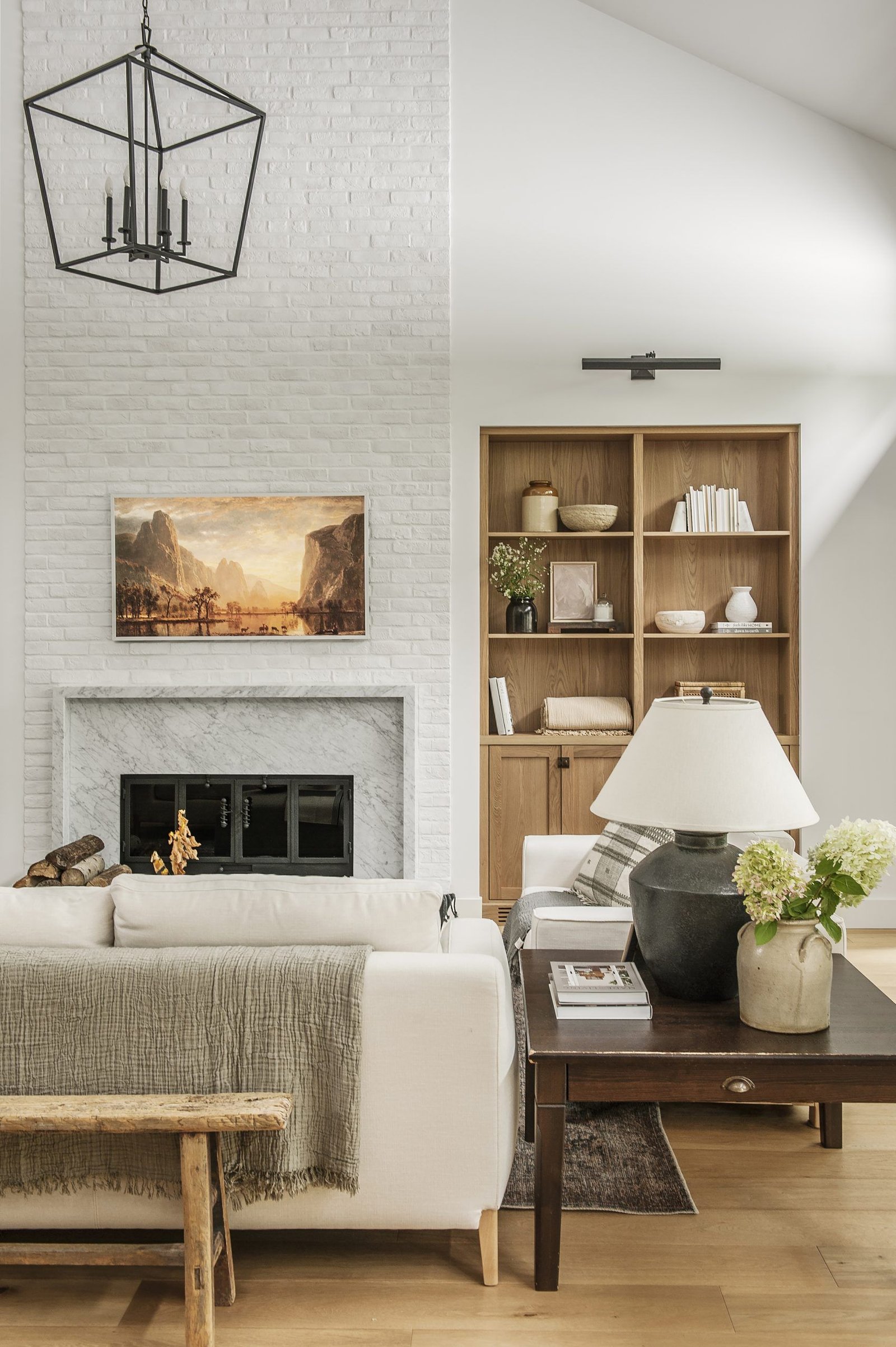
Every option has trade-offs. Every style has a context where it excels and contexts where it fails.
This guide eliminates the guesswork.
What follows is a curated breakdown of the most effective fireplace designs organized by category, with practical guidance on where each style works best.
Read it once, decide with confidence.
Why Your Fireplace Decision Requires More Than Taste
Aesthetic preference is only one input in the fireplace decision.
It’s not the most important one.
A fireplace must be proportionate to its room, appropriate to its architecture, and aligned with how you actually use the space.
A grand stone installation in a small room overpowers everything around it. A razor-thin linear fireplace in a traditionally styled home looks architecturally confused.
Before you fall in love with an image, do the practical work first. Measure the wall. Assess the ceiling. Determine whether functional heat output matters or whether ambiance is the primary goal.
This preparation narrows the field considerably—and prevents expensive regrets.
With that foundation in place, here are the designs worth considering.
Contemporary and Architectural Fireplace Designs
1. Wide-format linear gas fireplace.
The signature feature of high-end contemporary interiors. A low, horizontal flame running behind glass, recessed flush with the wall surface. No mantel. No ornamentation. Pure architectural minimalism.
Requires a minimum wall width of approximately eight feet to read correctly.
2. Flush-mounted electric insert with no visible frame.
Designed for spaces where structural alterations are impractical. These units integrate into existing openings or attach directly to the wall surface. Modern flame rendering technology is now convincingly realistic.
3. Monolithic poured concrete surround.
Industrial in character, powerful in presence. A continuous concrete form rising from floor to ceiling creates an unmistakable focal point with structural authority.
4. Blackened steel surround with a minimal shelf.
Matte or satin-finish steel enclosing the firebox, paired with a narrow floating shelf. The material contrast reads as deliberate and refined rather than industrial.
5. Recessed gas ribbon burner.
A long, narrow slot of flame embedded into the wall plane. The visual effect is closer to art than heating. Gas-fueled with mandatory professional installation—the visual result is without comparison.
Traditional and Natural Material Fireplace Designs
6. Dry-stacked natural stone from floor to ceiling.
The definitive rustic fireplace treatment. Rough natural stone laid without visible mortar lines from the floor to the ceiling creates an atmosphere of mountain refuge before a fire is even lit.
7. Antique timber mantel beam.
A structural intervention with outsized decorative effect. One salvaged or reclaimed timber beam above the firebox delivers age, texture, and authenticity that manufactured surrounds cannot replicate.
8. Diluted paint wash over exposed brick.
The brick’s texture and character survive while the color is neutralized. The effect is traditional without feeling heavy or dated.
9. Smooth river stone cladding.
Naturally tumbled stones produce a gentler, more organic appearance than angular stacked alternatives. They read particularly well against warm timber flooring and muted, natural-toned interiors.
10. Restored cast iron insert.
Functional nostalgia. A cast iron insert set into an existing hearth opening delivers genuine radiant heat, real wood combustion, and considerable visual charm.
Fireplace Designs That Serve Multiple Functions
The fireplace wall represents the most commanding surface in most living rooms.
Designing it purely around the firebox opening is an underutilization of significant visual and functional real estate.
11. Flanking built-in cabinetry and shelving.
Floor-to-ceiling built-ins on either side of the fireplace create a unified architectural composition that is simultaneously a display system, storage solution, and design statement.
12. Television enclosure with concealing cabinetry.
For fireplaces where a television is mounted above, concealment panels that close over the screen preserve the room’s visual integrity when the television is not in use.
13. Integrated firewood cubby beneath the hearth.
A recessed cavity at the base of the firebox provides dedicated storage for split firewood. The visual effect is purposeful and the practical benefit is immediate.
14. Flanking window seat benches with under-seat storage.
Upholstered built-in benches positioned symmetrically on each side of the hearth provide seating near the fire, concealed storage beneath the seats, and strong architectural symmetry.
Bold Fireplace Installations for Maximum Impact
Not every fireplace should defer to the rest of the room.
In some spaces, the right approach is to design the fireplace as the dominant architectural event and let everything else respond to it.
15. Open dual-aspect fireplace.
Visible from two adjacent rooms, this configuration functions simultaneously as a room divider and a shared focal point. The living room–dining room transition is one of its most effective applications.
16. Suspended ceiling-hung firebox.
A conical or drum-shaped fire vessel descending from the ceiling on an exposed flue. Overtly sculptural and inherently dramatic.
17. Tall archway firebox opening.
A pointed or curved arch above the firebox opening adds a formal, almost ecclesiastical grandeur that the standard rectangular format cannot achieve.
18. Full-height dark marble cladding.
Book-matched dark marble extending from the floor to the ceiling on either side of the firebox. The effect is deeply luxurious and entirely self-contained as a design statement.
19. Integrated indoor-outdoor fireplace opening.
A fireplace constructed in the glazed wall between interior living space and an exterior terrace, with flame visible from both sides. Exceptional when executed well, demanding in its planning requirements.
Cost-Effective Fireplace Transformation Strategies
Not all fireplace improvements require structural work.
In many cases, the fireplace itself is structurally sound but visually obsolete. The following approaches address appearance without touching the firebox.
20. Deep color paint applied to the brick surround.
Charcoal, deep navy, or forest green applied over old brick resets the visual register of the entire wall. It requires only paint, primer, and a weekend afternoon to execute.
21. Peel-and-stick tile overlay on the existing surround.
Contemporary adhesive tile products simulate natural stone, zellige, and ceramic convincingly enough to refresh a dated surround without mortar or grout.
22. Mantel replacement only.
Isolating the mantel for replacement—particularly substituting a heavy, dated style for a clean contemporary floating shelf—updates the fireplace without touching anything structural.
23. Large-scale artwork or mirror installation above the mantel.
When the fireplace surround is acceptable but the wall above it feels empty, a generously scaled leaning mirror or canvas resolves the problem without any changes to the fireplace itself.
24. Decorative fire screen as a styling element.
A well-proportioned screen with strong graphic character—arched, geometric, or Art Deco—elevates the appearance of an unused or underperforming firebox.
Electric Fireplace Solutions for Modern Living
The absence of a chimney or gas supply is no longer a meaningful constraint.
Electric fireplace technology has matured significantly, offering realistic visual effects and meaningful heat output.
25. Wide-format recessed electric insert.
Panoramic units spanning three feet or more mount into the wall like a recessed display. Adjustable flame appearance, heat intensity, and full remote operation are standard features. This wall-mounted unit demonstrates the category well.
26. Electric fireplace as the base of a media wall.
A purpose-built feature wall with an electric fireplace at its base, shelving integrated throughout, and a television positioned above creates a fully custom appearance without gas or masonry work.
27. Freestanding electric stove unit.
These compact, portable units reference the form of vintage cast iron wood stoves. They operate from a standard outlet, generate usable heat, and require no installation. The Country Living Smart Infrared Electric Fireplace Stove executes this concept with particular authenticity.
28. Credenza-integrated electric fireplace for dining spaces.
An electric flame element built into the base of a low storage credenza extends the application of electric fireplaces into dining areas and hallways.
Less Common Fireplace Design Details Worth Knowing
Beyond the mainstream options, a handful of design details are underutilized and genuinely impressive.
29. Fire glass media in place of logs.
Tempered fire glass available in cobalt, emerald, copper, or crystal tones replaces conventional log sets. The light interaction is distinctive and the contemporary aesthetic is immediate.
30. Candle arrangement in an inactive firebox.
An unused hearth opening furnished with pillar candles at graduated heights. A low-cost solution that lends warmth and intention to a space without any fuel or electricity.
31. Artisan plaster or limewash finish on the surround.
A hand-worked plaster surface creates an organic texture and subtle tonal variation that manufactured surfaces cannot reproduce. Currently one of the most requested finishes in high-end residential interiors.
32. Full decorative tile feature around the firebox.
Handmade zellige, glazed Talavera, or geometric encaustic tile extending across the full fireplace wall converts the hearth into a decorative centerpiece with genuine craft character.
33. Cantilevered hearth projection.
A concrete or stone hearth slab extending from the wall without visible brackets or support. The detail is subtle in photographs but striking in person.
A Framework for Choosing the Right Design for Your Room
The quality of a fireplace decision depends entirely on matching the design to the specific conditions of the room.
Apply these criteria:
Smaller room: Prioritize a wall-mounted electric or a simple surround. Dramatic installations require space to function correctly.
Open-plan layout: Linear or double-sided configurations define zones without interrupting spatial flow.
Traditional architecture: Natural materials—stone, brick, timber—support the existing character of the building.
Contemporary architecture: Minimal surrounds, concealed structure, and horizontal flame proportions align with modern spatial language.
Restricted budget: A new coat of paint, adhesive tile, or a replacement mantel shelf achieves meaningful transformation for under one hundred dollars.
The fireplace that works best for your room is the one that performs correctly within its actual environment—not the one that photographs best in someone else’s.
The Fireplace Is Where Your Living Room Begins
A fireplace is not decoration in the conventional sense.
It is the organizational center of the living room—the element that everything else is arranged in relation to. It sets the tone. It establishes scale. It determines what the room feels like before a single piece of furniture is placed.
When it’s right, the sofa, the coffee table, and the lighting compose naturally around it.
When it’s wrong, no quantity of styling accessories compensates.
You have thirty-three specific, actionable ideas in front of you. Each one is executable—whether you’re working with a contractor, a designer, or your own two hands on a weekend.
Choose the one that fits your room. Start with whatever scale makes sense—a different candle arrangement, a can of paint, a new mantel shelf.
The living room you’ve been working toward starts at the fireplace.