Small Balcony, Big Potential: Design Ideas That Actually Work in Apartments
Disclosure : This post may contain affiliate links or paid partnerships. I may earn compensation if you click a link or make a purchase, at no additional cost to you. See my disclosure for more info.
Here’s a scene you know too well.
Sliding door opens. You step onto the balcony. One glance around tells the whole story.
Bare concrete. A sun-bleached chair no one uses. Something dead in a pot you’d rather not look at.
You last about eight seconds before heading back inside.
The door closes. The balcony is forgotten. Again.
Ring a bell?
Of course it does.
You’ve browsed those picture-perfect balconies online. Twinkling lights. Lush greenery. A tiny table set for brunch like something from a lifestyle magazine.
And every time, your inner critic shows up right on cue:
“That’s lovely, but my balcony is basically a ledge. None of this applies to me.”
That inner critic doesn’t know what it’s talking about.
A small balcony isn’t a disadvantage. It isn’t wasted space. It isn’t a lost cause.
It’s an untapped goldmine right outside your door.
The problem was never the balcony. It’s that nobody handed you a real, practical roadmap for making it work.
Consider that problem solved.
By the time you reach the end of this piece, you’ll see that forgotten slab of concrete with fresh eyes.
You’ll know exactly what to do, where to begin, and how to make it the best part of your apartment — without pretending it’s something it’s not.
Let’s get into it.
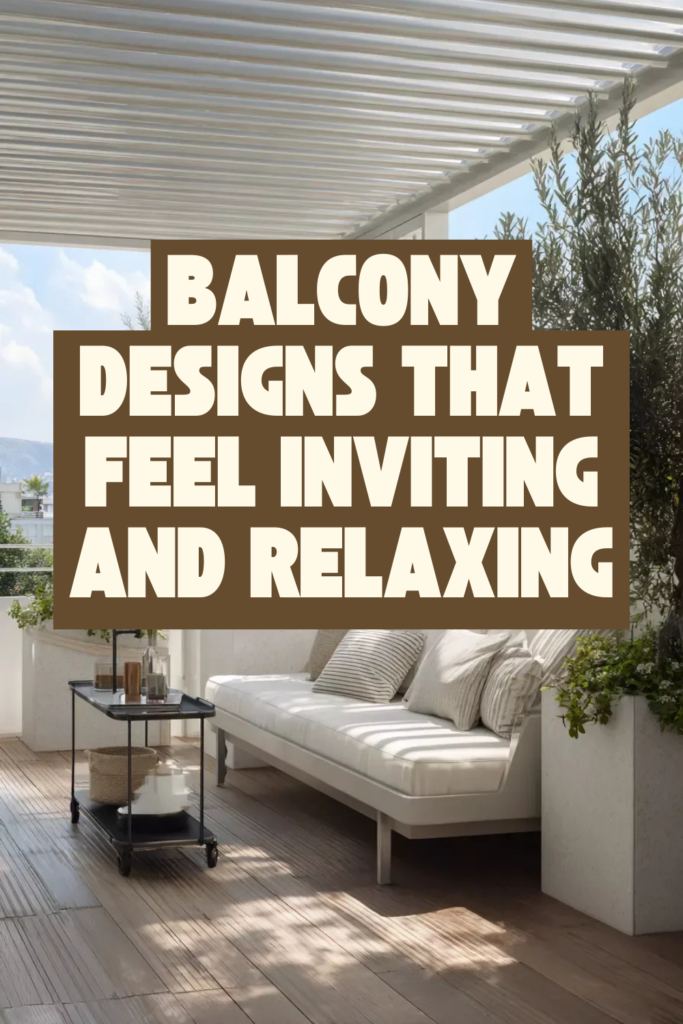
Real Quick — The One Trap You Must Avoid
Before anything else, I have to steer you away from the biggest blunder.
People see a gorgeous balcony on social media and try to replicate it exactly.
That stunning rooftop terrace you bookmarked? It’s attached to a villa in southern Spain with 160 square feet and endless sunshine.
Your compact, shady, wind-whipped balcony on floor six?
A different planet entirely.
Forcing that design onto your space leads to wasted money, frustration, and a balcony that still doesn’t feel right.
The balcony isn’t failing you. The approach is.
Winning balcony design starts with your actual conditions. Square footage. Weather patterns. Light exposure. Building policies. Budget.
Stop fighting your constraints. Start designing around them.
That’s when everything clicks.
Let’s break it down.
1. End the Plant Murder Cycle Once and For All
Let’s talk about the guilt sitting in the corner of your balcony.
Dead plants. Dried stems. Empty pots that remind you of good intentions gone wrong.
You tried. Things died. You assumed gardening isn’t your thing.
Here’s the reality: you’re not bad at plants. You just chose species that don’t suit your space.
Blazing south-facing sun? You need succulents, geraniums, lavender, rosemary. Plants built for scorching days.
Mostly shaded north-facing exposure? Reach for ferns, hostas, begonias, impatiens. They actually prefer filtered light.
Windy high-floor balcony? Low-profile, flexible plants work best. Thyme, sedum, ornamental grasses. They sway instead of snapping.
Can’t remember to water? Self-watering containers keep roots moist for days without your attention.
Constantly on the road? Snake plants and pothos. You’d have to try hard to kill them.
Start small. Three plants. Master those.
Add more later.
Your balcony garden should grow gradually. Trying to build an Eden overnight is how you end up with a plant cemetery.
2. Change the Details Each Season — Not the Entire Setup
This is the fast track to exhaustion.
You put together a gorgeous warm-weather balcony. October rolls around. It suddenly feels all wrong. You think the only option is starting from zero.
So instead, you do nothing. The balcony goes dormant until spring.
There’s a smarter way.
Create a year-round base layer. Your furniture. Your rug. Your primary lighting.
Then swap the small touches with each season.
Summer: bold-colored cushions, flowering plants, iced drinks on the table.
Fall: warm blankets, decorative kale, candlelight ambiance.
Winter: fresh evergreen clippings, soft fairy lights, a thick cozy throw.
You’re refreshing accents, not rebuilding from the ground up.
Half an hour. Minimal spending. Maximum freshness.
3. Go Vertical — Your Walls Are Doing Nothing
Most people only see their balcony in two dimensions.
Length and width. That’s it.
But look up. There’s a whole unused dimension staring back at you.
Your walls are blank. Your railing is bare. Both are sitting there wasting potential.
Wall-mounted planters. Hanging baskets. Tiered stands. Shelving units. Pegboards for tools and small pots.
One vertical stand fits six or seven plants where a single pot would go.
Rail-mounted containers bring in green without using any floor space whatsoever.
If you rent and drilling isn’t allowed, over-the-railing hooks and tension rod shelving solve everything.
Want fullness without clutter?
Build upward. That’s the unlock for small balconies.
4. Put a Rug Down (Stop Rolling Your Eyes)
Here comes the eye-roll.
“An outdoor rug? On a balcony? Seriously?”
Dead seriously.
This is the cheapest, easiest upgrade that makes a balcony feel like a real extension of your home instead of an outdoor afterthought.
It introduces color. Softness. Texture beneath your feet. It pulls the space together visually. Makes it look complete.
Choose one built for outdoor conditions — polypropylene or recycled material. Stands up to rain, mold, UV rays, and cleans off with a quick spray.
Size-wise, go for one that fits under your furniture with a border of floor visible at the edges.
That exposed edge makes the whole area feel roomier than it is.
Cheap trick. Huge payoff.
5. Start This Weekend. One Thing Only.
You’ve just taken in a lot.
Your mind is doing one of two things right now.
It’s either buzzing with excitement, already planning the first move.
Or it’s shutting down, overwhelmed by options.
If the second one is you, pay attention.
You don’t have to do all of this at once.
Grab one idea from this list. Only one.
Get the rug. String up some lights. Buy three plants that actually match your light situation.
Handle that single task this weekend.
Next weekend, knock out another one.
Then another.
One month from now, you’ll walk outside and the space will feel completely different.
You’ll sink into your chair. You’ll breathe. You’ll look around and wonder, “What took me so long?”
That moment is sitting out there waiting for you.
Go claim it.
6. Set Up Intentional Zones (Even in Tiny Spaces)
I know what you’re thinking.
“Zones? My balcony barely fits me and a chair. What zones?”
Give me a minute.
Even the most cramped balcony can be organized into areas with purpose.
A single chair with a small side table tucked in a corner? Your morning ritual spot.
A row of planters hooked to the railing? Your personal garden strip.
An outdoor rug spread under the seating area? The visual anchor tying it all together.
You don’t need room dividers or separate sections. Just deliberate arrangement.
Spaces with clear intent get used. Spaces that feel chaotic and accidental get ignored.
That’s how brains work. Use that knowledge.
7. Protect Your Setup From the Elements
Nobody warns you about this part.
Rain soaks cushions. Wind tips over lightweight furniture. Sun bleaches every fabric in sight. Moisture turns forgotten textiles into mold farms.
Skip weatherproofing, and your beautiful balcony crumbles in two months flat.
Prevention is everything.
Select furniture made from aluminum, resin wicker, or treated wood — stuff designed for outdoor punishment.
Keep cushions inside a weatherproof deck box when they’re not in use. Toss a cushion on the lid and it moonlights as seating.
Go with fade-proof fabric for throws and covers. Premium brands exist, but affordable alternatives get the job done too.
See a storm brewing? Pull fragile items inside. Takes a minute or two. Saves a season’s worth of replacement costs.
8. Grab a Tape Measure Before You Grab Your Wallet
Sounds like the most tedious advice imaginable.
“I can see my balcony is small. What’s a tape measure going to tell me?”
It’s going to tell you that the table you’re about to buy will leave you zero room to actually enjoy the space. That’s what.
Measure everything. Length, width, railing height, door swing radius, drainage spots.
Then lay down painter’s tape on the floor in the dimensions of any furniture you’re considering.
Instantly, you’ll see what fits and what creates a traffic jam.
No assumptions. No returns. No buyer’s remorse.
It’s five minutes of effort that prevents five headaches.
9. Check the Rules Before You Commit
Not glamorous. But necessary.
Many apartment buildings enforce specific guidelines about balconies. What you’re allowed to hang, attach, or place. Whether grills are OK. Sometimes even color restrictions.
Review your lease first. Design second.
Some complexes ban any drilling into exterior walls. Others restrict railing modifications. A few limit furniture types or sizes.
Find out before you invest time and money.
Discovering your setup violates building policy after you’ve spent a weekend creating it?
That’s a headache with a simple prevention plan.
10. Layer Your Lighting — This Single Step Changes Everything
Ask yourself: what’s the fastest way to make a balcony feel completely different?
Not furniture. Not color schemes.
Lighting.
Most apartment balconies offer one light source: a flat, cold overhead fixture by the door.
About as cozy as a gas station restroom.
The fix? Multiple layers.
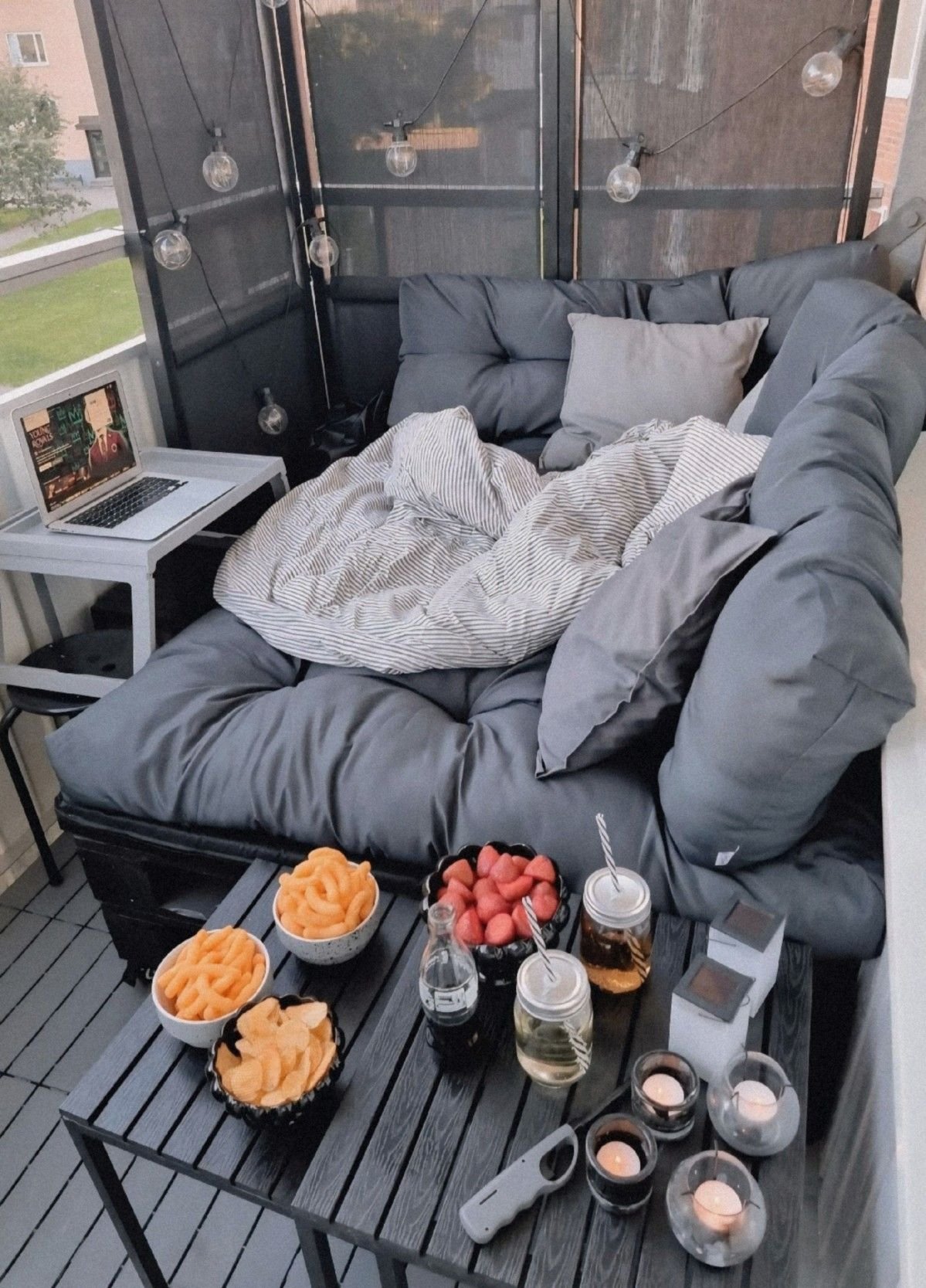
Top layer: Warm-white string lights along the railing or draped overhead. No rainbow colors.
Middle layer: Solar lanterns perched on a table. Battery-operated sconces mounted with adhesive strips.
Bottom layer: LED candles in glass vessels. Tiny solar lights nestled among planters.
Three layers transform the atmosphere.
Your balcony shifts from harsh and uninviting to warm, glowing, and impossible to leave once the sun drops.
Total investment? Probably less than dinner out.
11. Pick Furniture That Works Harder Than You Do
Small-space rule number one: every item must pull its weight.
Something that only looks decorative? Luxury you can’t afford out here. Move it along.
What belongs on your balcony is furniture that multitasks.
A folding bistro set that stores flat against the wall. A bench with a hollow interior for stashing gear. A wall-hung table that drops open for meals and folds flat afterward.
Stackable seating. Nesting side tables. A hanging chair that keeps the floor completely open.
The filter is brutal but effective.
If it doesn’t fold, stack, store, or serve at least two purposes — it’s taking up space it hasn’t earned.
Harsh? Maybe.
Regret-proof? Absolutely.
12. Handle the Privacy Gap
Let’s acknowledge the obvious.
Your neighbor is close enough to share a meal with. People across the way have a clear line of sight to your morning routine.
That exposed feeling is enough to keep most people indoors.
Solve it and you’ll actually start using the space.
Tall planters packed with bamboo or tall grasses form a living curtain. Weather-tough outdoor drapes let you close off or open up the view on demand. Lattice panels planted with ivy or jasmine fill in more as months go by.
Reed or bamboo screens attached to the railing with zip ties are quick, cheap, and effective.
The goal isn’t total isolation. Just enough cover to let your shoulders drop.
That’s the difference between a balcony that works and one that doesn’t.