43 Front Door Makeover Ideas That Will Completely Change Your Curb Appeal
Disclosure : This post may contain affiliate links or paid partnerships. I may earn compensation if you click a link or make a purchase, at no additional cost to you. See my disclosure for more info.
Let me guess — you glanced at your front door this morning and sighed.
Not a happy sigh. A resigned one. The kind that says “I keep meaning to do something about this.”
The paint looks tired. The hardware is practically vintage at this point. The whole entry radiates a vibe of “we got busy and stopped updating things around here.”
You notice it every morning when you leave. Every evening when you come home. Every time a visitor parks out front and walks up your path.
You know what the good news is? Front doors are one of the most impactful and most achievable upgrades you can make to a home.
You don’t need a full renovation. You don’t need to tear anything out. You just need the right idea — and this list has 43 of them.
Let’s find the one that’s right for your home.
Door Colors That Turn Heads (Without Looking Overdone)
Color is the single fastest way to transform a front door. And yet most people play it so safe they might as well have left it beige.
Here are six colors that are bold enough to be interesting but polished enough to stay timeless.
1. Matte black with warm brass accents. This is the combination that never gets old. Deep, sophisticated, and endlessly versatile across exterior styles and materials.
2. Terracotta. It sounds risky. It looks incredible. Especially against pale siding, it brings a Mediterranean warmth that feels grounded and contemporary at the same time.
3. Bottle green. If you haven’t noticed this shade taking over design feeds, you will. Rich, earthy, and perfectly at home alongside stone, brick, or timber cladding.
4. Deep navy. Classic in all the best ways. A satin or semi-gloss finish gives it depth and helps it hold up beautifully in all weather.
5. Sage green. Soft, calm, and enduring. This one works especially well on cottages, older homes, and any exterior with natural materials.
6. Slate gray. The understated option that still makes a statement. Cooler than black, quieter than navy, and remarkably easy to maintain.
Quick tip: paint a large swatch directly on your door and observe it at different times of day before committing. Morning light and afternoon sun read very differently on the same color. What looks perfect at noon can look flat by 4pm.
Pivot Doors — The Upgrade That Changes Everything
Most front doors hinge from one side and swing. Pivot doors do something different — they rotate on a central axis, creating a movement that’s slow, deliberate, and genuinely dramatic.
If you’ve ever walked through the entrance of a luxury hotel and felt that intangible sense of arrival, a pivot door was probably involved.
7. Wide-format timber pivot. The sheer scale alone changes the energy of an entry. These doors read as grand without needing ornate detailing — the proportions do all the work.
8. Thin-framed steel and glass pivot. For homes with a more industrial or contemporary aesthetic, this combination brings light and architecture together beautifully.
9. Powder-coated aluminum pivot with obscure glass sidelights. Combines the drama of a pivot with the practicality of privacy. A modern, resolved look.
Pivot doors involve specialized hardware and typically require professional installation. They’re a meaningful investment. But if your entry is the thing you notice every single day, it’s worth asking whether a door that genuinely excites you each time you open it is actually worth the cost. Most people who go for it say yes.
Bringing More Light Into Your Entry
A lot of homes have a dark, unwelcoming space right behind the front door. More often than not, the door itself is the reason.
Adding glass — in the right form — can change everything about how that space feels.
10. Floor-to-ceiling glass door with minimal framing. If your street location allows it, this is the most dramatic light solution available. It turns a foyer into something that feels genuinely open.
11. Half-panel door with etched or frosted glass. Privacy maintained, light welcomed. The etched texture adds a layer of visual interest even when you’re looking at it from inside.
12. Flanking sidelights on either side. The simplest upgrade on this list: you don’t replace the door at all, just add slim glass panels alongside it. Transforms the feel of the entrance in half a day.
13. Transom window over the frame. The oldest trick in the architect’s handbook. A wide horizontal glass band above your door brings in light from a high angle — warm, even, and beautiful.
14. Reeded or fluted glass panel. This texture is everywhere in contemporary design right now. It diffuses and scatters light in a way that feels almost sculptural.
Heads up: clear glass on a busy street means everyone walking past can see directly into your home. Be realistic about how exposed your entry is before choosing the most transparent option. Frosted, reeded, or obscure glass gives you the light without the loss of privacy.
Wood Doors That Look Contemporary, Not Rustic
The moment someone hears “wood front door,” their mind often goes somewhere outdated. Stained pine. Heavy panels. A knocker shaped like a lion.
That’s not what we’re talking about here. Modern wood doors are a completely different world.
15. White oak with vertical grain. Pale, clean, and quietly beautiful. Grain direction matters: vertical planks make a door look taller and more contemporary.
16. Walnut with a hidden frame system. The dark tones of walnut create drama that no painted door can match. The hidden frame means the wood surface reads as uninterrupted.
17. Teak with horizontal banding. Warm, richly grained, and naturally resistant to moisture. One of the most practical premium choices for exterior applications.
18. Blonde maple with a smooth flush face. For a cooler, more Scandinavian sensibility, maple’s light tones and fine grain are ideal.
19. Reclaimed timber in a clean modern profile. Salvaged wood brings a story to a door that new materials never can. The patina, the marks, the variation — all of it adds up to something genuinely unique.
All timber needs maintenance — that’s just the reality. If your schedule or climate makes that difficult, look at fiberglass doors with a wood-grain surface. The best ones are convincing and require almost no upkeep. Choose based on your actual lifestyle, not your aspirational one.
Door Hardware That Makes the Biggest Difference for the Least Money
Hardware is where most people skip corners — and it’s exactly where you shouldn’t.
New hardware won’t fix a bad door, but great hardware can elevate a decent one into something that looks genuinely considered.
20. Matte black lever handle. Flat, modern, and surprisingly affordable. Replaces in minutes. The difference in appearance is immediate.
21. Satin brass bar handle. The long vertical format makes a door look architecturally intentional. This single piece does more for a door’s appearance than almost anything else at the price point.
22. Keypad smart lock. No keys to lose. Clean aesthetic. The better models have a low enough profile that they don’t disrupt the door’s overall design.
23. Oversized address numbers. Large, well-spaced numerals in a contemporary font are one of the cheapest and most effective exterior details you can add.
24. Built-in letter slot. Practical and elegant. Particularly well-suited to homes with a European or mid-century influence.
While you’re at it, check your hinges. Mismatched finishes across handle, knocker, and hinges is one of those things that looks fine individually but undermines the whole when you step back.
A full hardware refresh — lever, pull, numbers, hinges — typically costs less than a single piece of furniture and takes an afternoon. The return on that investment, in terms of how your home looks from the street, is genuinely outsized.
Double Doors for Maximum Impact
Double doors do something psychologically interesting. They create an expectation before you even step inside.
They say: what’s through here is worth the entrance.
25. Steel-framed glazed French doors. Generous natural light, strong silhouette, and a look that works equally well from inside and out.
26. Timber double doors with pivot hardware. The combination of double-leaf and pivot mechanism is one of the most dramatic entry statements possible. Worth it when the proportions allow.
27. Arched pair with fluted glass inserts. The curve softens what might otherwise feel severe. The fluted glass brings contemporary texture to a classically shaped opening.
28. Unequal-width double doors. The asymmetry catches the eye. Day-to-day, you use the wider leaf only; the narrower one swings open for moving furniture, hosting gatherings, or making an entrance.
If you’re retrofitting double doors into an existing single opening, get a structural assessment before you order anything. Widening a door opening involves the structure above it, and that’s not a detail you want to discover after the doors have been delivered.
Minimalist Doors That Speak Through Restraint
Not every great door announces itself. Sometimes the most impressive thing a door can do is blend in perfectly.
29. Invisible-frame flush door. When done well, a flush door that sits perfectly level with the surrounding facade creates an almost eerie seamlessness. The entry becomes a moment of discovery.
30. Push-plate entry with no lever or pull. The complete absence of visible hardware is its own statement. You engage the door with a flat plate — push to enter, pull to exit. Extremely modern.
31. Tone-on-tone door and surround. Paint the door to match the wall around it. When executed in the right setting — typically a contemporary or new-build home — this reads as architect-designed.
32. Solid door with one narrow vertical light. A single slim strip of glass, set slightly off-center. Breaks the expanse of the door just enough without compromising its clean reading.
33. Raw concrete-finish composite. For homes with a brutalist or industrial character, a door surface that mimics raw concrete or board-formed cement completes the architectural language perfectly.
Minimalist design isn’t about emptiness. It’s about precision. Every element that remains must earn its presence. When it works, it’s among the most considered design choices you can make.
Mid-Century Doors With Enduring Appeal
Mid-century modernism has never really gone away — it’s just cycling back into wider awareness every few years. The reason is simple: the design principles are genuinely good.
34. Angular cutout or inlaid geometric panels. Diamonds, rectangles, starbursts — the graphic quality of these patterns is striking and surprisingly adaptable to contemporary contexts.
35. Vivid painted door with period-appropriate hardware. A warm orange, lemon yellow, or avocado green door paired with a sunburst or ring knocker is a confident, joyful choice.
36. V-groove vertical timber in teal. Teal was the defining door color of the era. Pair it with simple round hardware and modern-font house numbers for a look that’s simultaneously retro and fresh.
37. Flat door with a column of square windows. Three stacked squares, centered or slightly offset. It’s a design that was considered radical in 1960 and reads as sophisticated today.
If your home has original mid-century bones, fighting against them with an inappropriate door style is almost always a mistake. Lean into what your house already is. The right door will feel inevitable rather than added.
Entry Surrounds That Complete the Picture
The door is the focal point — but what frames it shapes the whole composition.
38. Vertical board-and-batten cladding around the door. A popular and effective technique: extending the panel detail around the entry creates a defined, gallery-like surround.
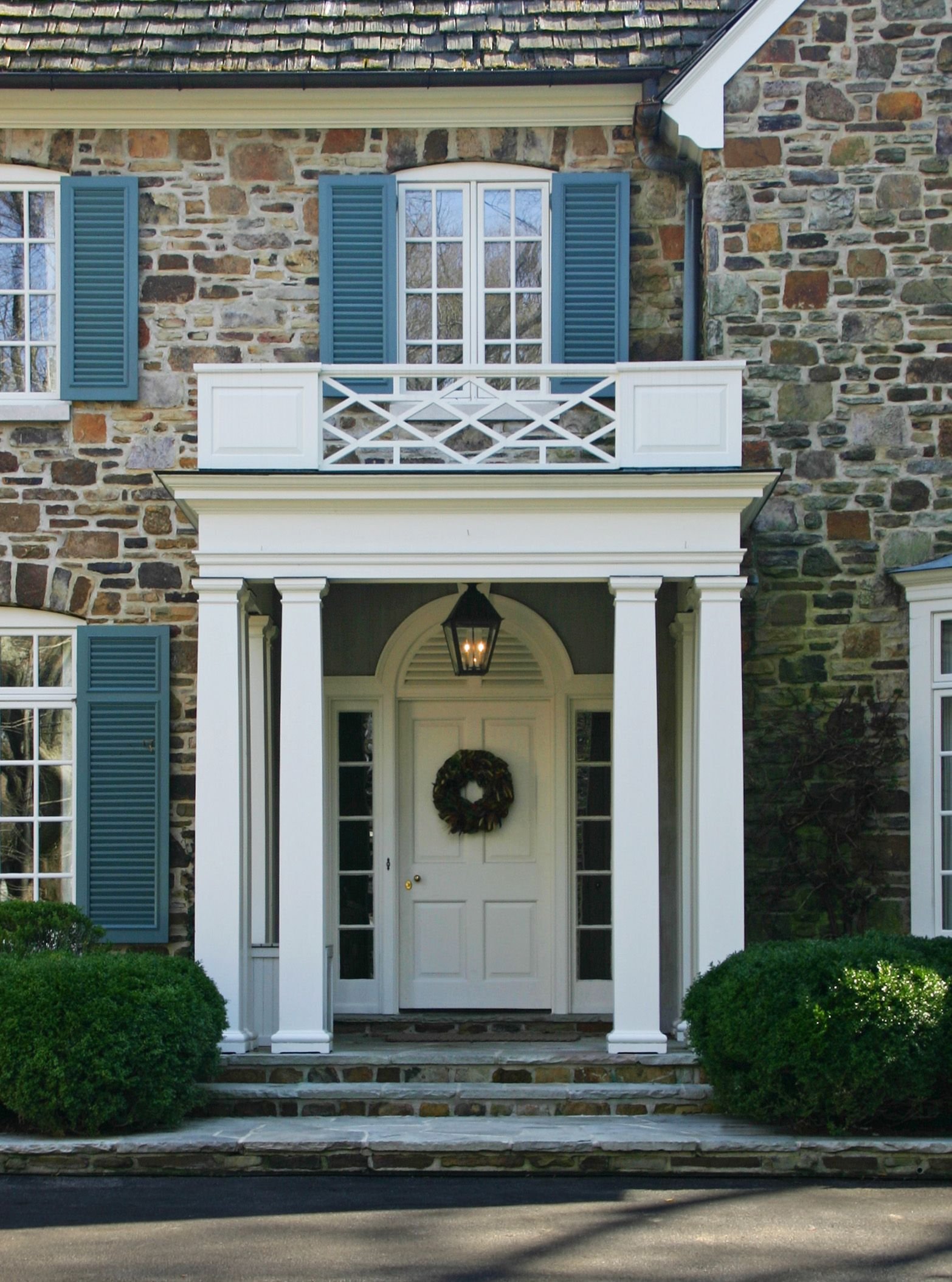
39. Cladding the door surround in natural stone or large-format tile. The material change creates visual depth and tactile contrast that lifts the whole entry.
40. Contrasting trim in a darker tone. On a pale exterior, painting the door architrave and surround in a deep contrasting color adds definition and anchors the door within the facade.
41. Framed planting recesses either side of the entry. Built-in planters flanking the door bring life, color, and softness to an entry that might otherwise read as hard and flat.
42. A setback entry with atmospheric lighting. Stepping the door back from the facade creates a threshold — a moment of transition between outside and inside. A well-chosen pendant or architectural downlight turns this into something genuinely beautiful after dark.
43. A generously scaled entrance mat. The last detail and one of the most overlooked. A large, quality mat in a simple design grounds the entire entry composition.
Picking Your Starting Point
You’ve just looked at 43 ideas. That’s a lot to hold in your head at once.
Here’s the honest advice: don’t try to do everything.
Look at your entry right now and identify the single element that bothers you most. The color? The hardware? The darkness of the hallway just inside?
Fix that one thing. Do it well. This season.
That’s how homes actually improve — not in overwhelming, expensive waves, but in clear-headed, deliberate steps taken consistently over time.
Your front door is the beginning of your home’s story. Make sure it’s one worth starting.