28 Japanese Bathroom Inspirations for a More Peaceful Daily Routine
Disclosure : This post may contain affiliate links or paid partnerships. I may earn compensation if you click a link or make a purchase, at no additional cost to you. See my disclosure for more info.
You walk through the door completely spent.
Your feet hurt. Your brain is still replaying the day’s conversations. Your inbox hasn’t stopped since this morning.
You step into your bathroom, take a look around, and feel… empty.
No relaxation. No release. Just a generic room full of things that needed replacing months ago.
Recognize the feeling?
What most people don’t realize is that your bathroom could be the most restorative room in your entire home. The one place that genuinely slows your body and mind down.
That’s not fantasy. That’s the foundation of Japanese bathroom philosophy.
Not for aesthetics. Not for social validation. For genuine recovery.
And you don’t need a major renovation, an overseas trip, or an unlimited budget to experience it.
You just need the right principles. And a little intention.
Let’s begin.
What Makes Japanese Bathrooms So Calming
Let’s start with the philosophy behind the design.
In Japan, the bathroom serves a purpose far beyond hygiene. It’s a sacred pause.
Bathing restores the spirit alongside the body. This belief permeates every design element — materials, spatial flow, how light enters the room.
The result? A space that genuinely feels like an escape.
The best part? These principles are surprisingly accessible, no matter the size or condition of your current bathroom.
Here are the ideas that can shift everything.
Layout and Spatial Thinking
1. Clearly separate your wet and dry areas
Japanese homes treat the bathing zone and the changing zone as entirely distinct spaces. Water lives where it belongs, and nowhere else.
In a smaller bathroom, even a glass partition or a minor floor transition can establish this separation. It keeps everything drier, tidier, and more serene.
2. Let the soaking tub command the room
In Japanese design, the bathtub doesn’t hide in a corner. It owns the space.
It’s the defining element. Everything else serves it.
Given sufficient space, position your soaking tub so that it draws your attention naturally as soon as you enter.
3. Set up a pre-bath rinsing station
One of the most striking distinctions from Western habits: you wash yourself before you get into the tub.
A low shower station with a handheld showerhead and a wooden stool lets you rinse before soaking.
The tub stays immaculate. The ritual remains whole.
4. Enclose the toilet in its own private space
Space isn’t the issue. A simple pocket door or partition is all it takes.
Separating the toilet from the bathing area makes the entire bathroom feel more like a private retreat and less like a shared utility space.
Choosing the Right Materials
5. Bring in hinoki cypress wherever possible
Hinoki is the premier wood for Japanese bathrooms. It repels moisture and resists mildew naturally.
What truly distinguishes it is the aroma. Steam draws out a clean, woody citrus fragrance.
A hinoki bath mat, a wooden stool, or a tray beside the tub can elevate the entire sensory experience.
6. Let natural stone ground the space
Smooth river pebbles, slate slabs, or pebble-tile flooring create a tangible connection to the earth beneath you.
A pebbled shower floor isn’t only beautiful to look at. It delivers a gentle reflexology effect each time you step on it.
7. Embrace matte finishes throughout
High-gloss tiles suggest a hotel showroom. Matte surfaces suggest something quieter.
Matte finishes — on tiles, fittings, and countertops — diffuse light softly. They lend the room a warmer, more grounded quality that defines the Japanese sensibility.
8. Echo washi paper through textured wall treatments
Washi itself isn’t suited to wet rooms. But textured panels that evoke that soft, handmade quality add unmistakable warmth to the walls around you.
The effect is understated. Which is exactly what it should be.
Mastering the Element of Water
9. Invest in a deep ofuro soaking tub
This one is essential for an authentic Japanese bathing experience.
An ofuro is both deeper and more compact than its Western counterpart. You sit upright in it, immersed to the shoulders, completely surrounded by warm water.
From budget-friendly to premium, freestanding options are widely available. This single change alone can redefine what bathing means to you. A deep soaking tub is the heart of the Japanese approach to bathing.
10. Install an overhead rain showerhead
A rain showerhead simulates the softness of standing under a light downpour.
No pressurized stream. No awkward angles. Water falls vertically, enveloping your whole body.
That’s not just a shower. That’s a daily act of restoration.
11. Install a handheld wand with a sliding rail
Versatility matters here. A sliding rail makes it easy to adjust the height for standing or sitting positions.
It’s a functional feature that also reflects the Japanese philosophy of mindful, deliberate washing.
12. Add a water feature for acoustic depth
The gentle sound of moving water is central to Japanese garden and interior culture alike.
A small fountain placed near your tub — or even a wall-mounted trickle spout — layers a dimension of calm that visual elements alone cannot provide.
Lighting as a Mood Tool
13. Replace harsh lights with warm, dimmable fixtures
Bright overhead lighting is the fastest way to ruin the atmosphere.
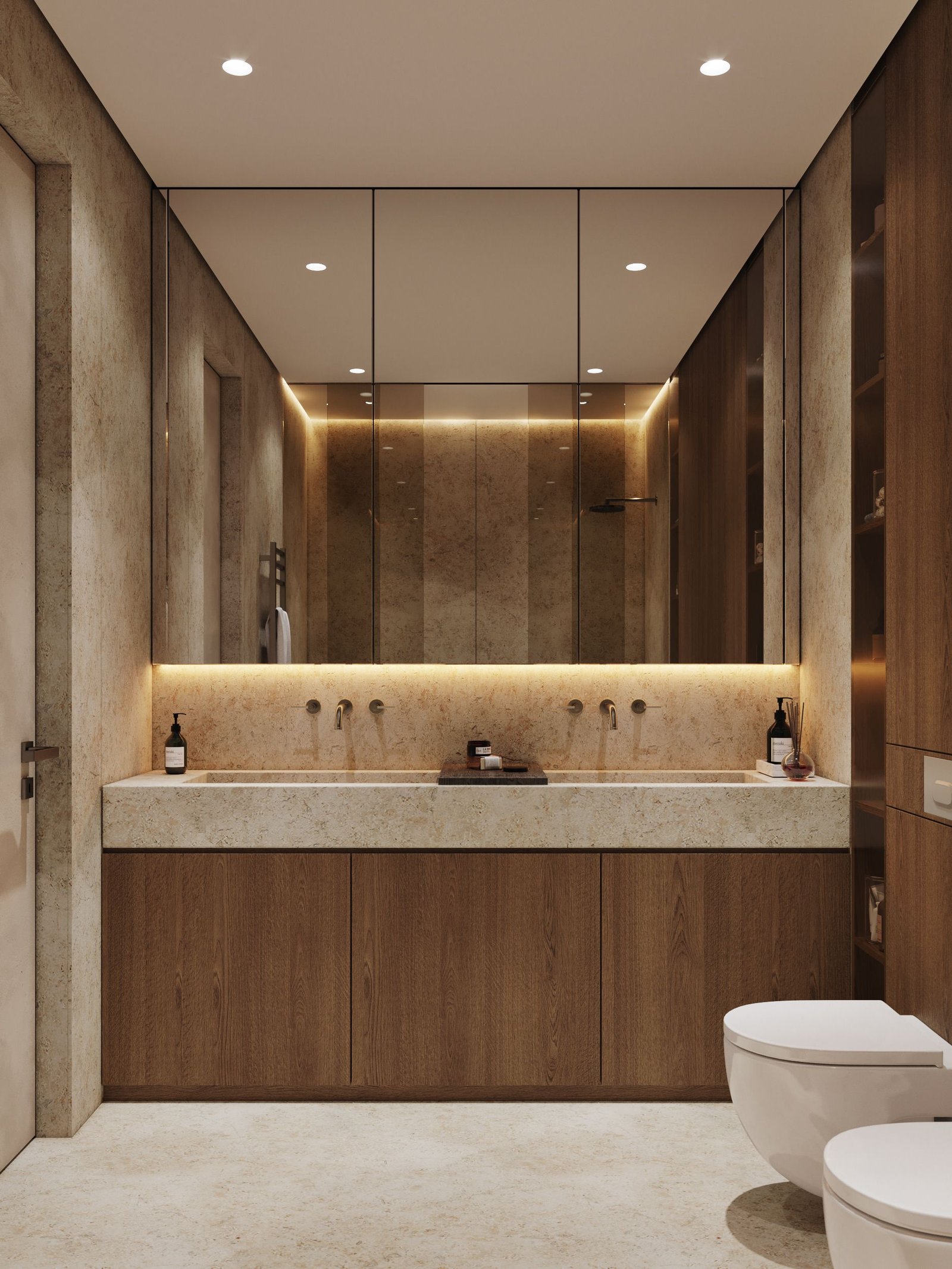
Warm LED strips hidden behind mirrors or beneath floating vanities shift the mood entirely. A dimmer switch puts you in full control.
14. Invest in a backlit vanity mirror
A backlit mirror replaces harsh direct glare with a soft, even luminosity that flatters and relaxes at the same time.
The diffused glow it creates makes even a small bathroom feel more spacious and serene.
15. Introduce candlelight or lantern-style warmth
Paper lantern-inspired pendant lights or carefully placed candle holders on the tub edge create the flicker your nervous system responds to.
Spas worldwide rely on candlelight for a reason. It communicates to your body that it’s time to decompress.
The Power of Simplicity
16. Store everything out of sight
Visual clutter and calm simply cannot coexist.
Floating vanities with discreet drawers, recessed cabinetry, and built-in shower niches ensure your toiletries disappear when not in use.
Japanese bathrooms look effortlessly clean because they prioritize visual order above everything.
17. Limit yourself to two or three tones
Off-white. Warm stone. Soft taupe. Natural timber.
That’s your palette. Nothing more. Bold accents and patterned textiles have no place here.
A restrained color scheme creates the illusion of infinite space and quiet, even in the smallest rooms.
18. Pick one beautiful object and give it space
One ceramic vase. One refined soap dish. One well-placed flower.
This reflects the Japanese idea of “ma” — the significance of empty space. What surrounds an object defines it as much as the object itself.
19. Unify your towels in a single neutral color
Variety in towel colors reads as chaos, not comfort.
Choose one shade. One quality. Arrange them on an open wooden shelf or fold them neatly. A minor change with an outsized visual effect.
Letting Nature In
20. Introduce a plant that loves steam
Ferns, pothos, bamboo, peace lily — these varieties genuinely thrive in bathroom humidity.
One green plant near the tub bridges the gap between interior and nature with minimal effort. This is the essence of “shizen” — the Japanese ideal of natural, unaffected beauty.
21. Lay a bamboo tray across the bathtub
A bamboo tray spanning the tub holds a mug of tea, a novel, or a single tealight.
It’s not really about the objects. It’s about creating a deliberate pause. A reason to be fully present in the moment.
22. Create a visual anchor — natural or framed
A bathroom window shouldn’t be blocked with heavy drapes. Opt for frosted glass to maintain privacy while welcoming natural light.
If there’s no window, a framed nature image — a forest, a coastline, a mountain mist — gives your gaze somewhere peaceful to rest.
Never underestimate the importance of where your eyes go when your mind is still.
Sensory Details That Make the Ritual Complete
23. Mount a heated towel rack
Emerging from a hot soak to a warm towel is one of those quietly luxurious moments that stays with you.
A wall-mounted heated towel rack is inexpensive, easy to install, and transforms every bath into something that feels properly indulgent.
24. Hang eucalyptus or cedar bundles in the shower
Fix a bunch of fresh eucalyptus near your showerhead. The steam releases the oils and fills the room with a soothing, forest-like scent.
No plug-ins. No synthetic fragrance. Just the natural world at work.
25. Heat the floor
Bare feet on freezing tiles at six in the morning is a minor assault. It immediately disrupts any sense of peace you might have had.
Radiant floor heating is the ideal solution. But a well-placed wooden bath mat addresses the problem just as effectively on a modest budget.
26. Use sound as a design element
A waterproof Bluetooth speaker playing rainfall, gentle flute music, or ambient white noise changes the acoustic character of the room.
Scent and light receive all the attention. Sound remains the most underused lever in bathroom design.
27. Settle on a signature subtle fragrance
Not a room spray. Not a plug-in diffuser.
A hinoki chip in a ceramic dish. One incense stick lit before you enter. A cedarwood oil drop in a bowl of warm water.
Japan’s “kodo” tradition views fragrance not as decoration but as a gateway to present-moment awareness.
28. Keep a lightweight robe or yukata on the door
The ritual extends beyond the tub.
A simple cotton or linen robe hung on a wooden hook carries the warmth of the soak forward into the moments that follow.
From water to fabric without interruption. The spell holds.
The Bigger Picture Behind All of This
Step back for a moment. This isn’t really about bathroom décor.
It’s about carving out a space that genuinely renews you. A room that earns its keep every single morning and evening.
A place where the demands of your day cannot follow you. Where your body remembers what rest actually feels like.
Japan has held this understanding for generations. Bathing is not a task. It’s self-repair.
And you are worth a bathroom designed with that purpose in mind.
You don’t need to tackle all 28 of these changes at once. Pick one. Perhaps the tub, perhaps just clearing the clutter, perhaps a single plant.
But whatever you choose, let it be intentional.
Because that’s ultimately what Japanese design is built on. Not the aesthetics. Not the materials.
The conviction that a few quiet minutes each day are worth protecting.
Now build the room that makes them possible.