Brick, Pipe & Warmth – 39 Industrial Living Room Ideas That Actually Feel Inviting
Disclosure : This post may contain affiliate links or paid partnerships. I may earn compensation if you click a link or make a purchase, at no additional cost to you. See my disclosure for more info.
There’s something in your living room that’s not quite working.
You can’t always name it. But it surfaces every time you walk in. The room functions. It’s presentable. Yet it never quite feels like yours.
Industrial design caught your attention. Exposed metal, weathered wood, brick walls, raw pendant fixtures that look like they belong in a converted warehouse.
You feel something when you look at those spaces. Not just aesthetic appreciation — something more like recognition.
The problem surfaces when you try to picture yourself inside them. Those rooms look like architecture projects. Visually impressive, but cold in the bone.
“I want that feeling. But not that temperature.”
Here’s what the best industrial interiors actually do: they treat warmth as a material, just like metal and brick. They layer it in deliberately. Soft against hard. Warm against cool. Organic against geometric.
You’re not choosing between grit and coziness. You’re learning to stack them.
These 39 ideas are your guide. Every one is designed to help industrial character and genuine livability coexist in your living room.
Ready? Here we go.
How to Layer Lighting for Maximum Depth
Industrial lighting goes wrong when it’s treated as a single decision.
One oversized pendant. One switch. Done and done.
Except it’s not done at all. A single source creates a flat, theatrical quality — not a mood.
Depth in a room requires multiple light sources working together.
1. Suspend a collection of pendant lights at staggered drop heights.
Four or five fixtures grouped at varying levels avoids the single-bulb cliché and brings rhythm to the ceiling plane.
2. Set a matte black adjustable floor lamp near a seating corner.
Articulated task lamps are functional first and sculptural second. Both qualities matter in industrial design.
3. Install aged brass swing-arm sconces flanking the sofa or a piece of art.
Brass instantly softens the metallic palette. Wall sconces create focused zones of warmth that pull the room together at eye level.
4. Run filament bulbs on a black cable across the ceiling span.
Use genuine filament bulbs — not the plastic imitation kind. Strung across a high ceiling on a weighty black cable, they transform the overhead space entirely.
5. Set a cluster of pillar candles on a metal tray on the coffee table.
No electric light source replaces real flame. A grouping of thick candles shifts the room into an entirely different emotional register. Flame is warmth you can see moving.
Organic Elements — Nature’s Counterpoint to Industrial Hard Lines
The quickest antidote to an industrial room that feels sterile?
Bring nature inside it.
Living things — or materials drawn from nature — neutralize hard edges and cold surfaces on contact.
6. Fill an empty corner with a large floor plant.
A rubber tree, snake plant, or bird of paradise in a textured basket solves the dead vertical space problem and radiates biological warmth.
7. Group a small collection of plants on a metal bracket shelf.
Four or five small species in mixed pot sizes, varied leaf shapes. Instant garden effect on an otherwise bare wall.
8. Display dried botanicals in a stoneware pot.
Dried pampas grass, branches, or preserved eucalyptus offer all the textural richness of live plants with zero maintenance requirements.
9. Add natural stone accents — a marble tray, a geode bookend.
Stone sits naturally alongside iron and salvaged timber without trying too hard. It adds another natural layer to the material story.
Establishing the Right Structural Foundation
Decoration follows structure. The architectural choices you make set the tone for everything that goes into the room afterward. Get these decisions right and everything else becomes easier.
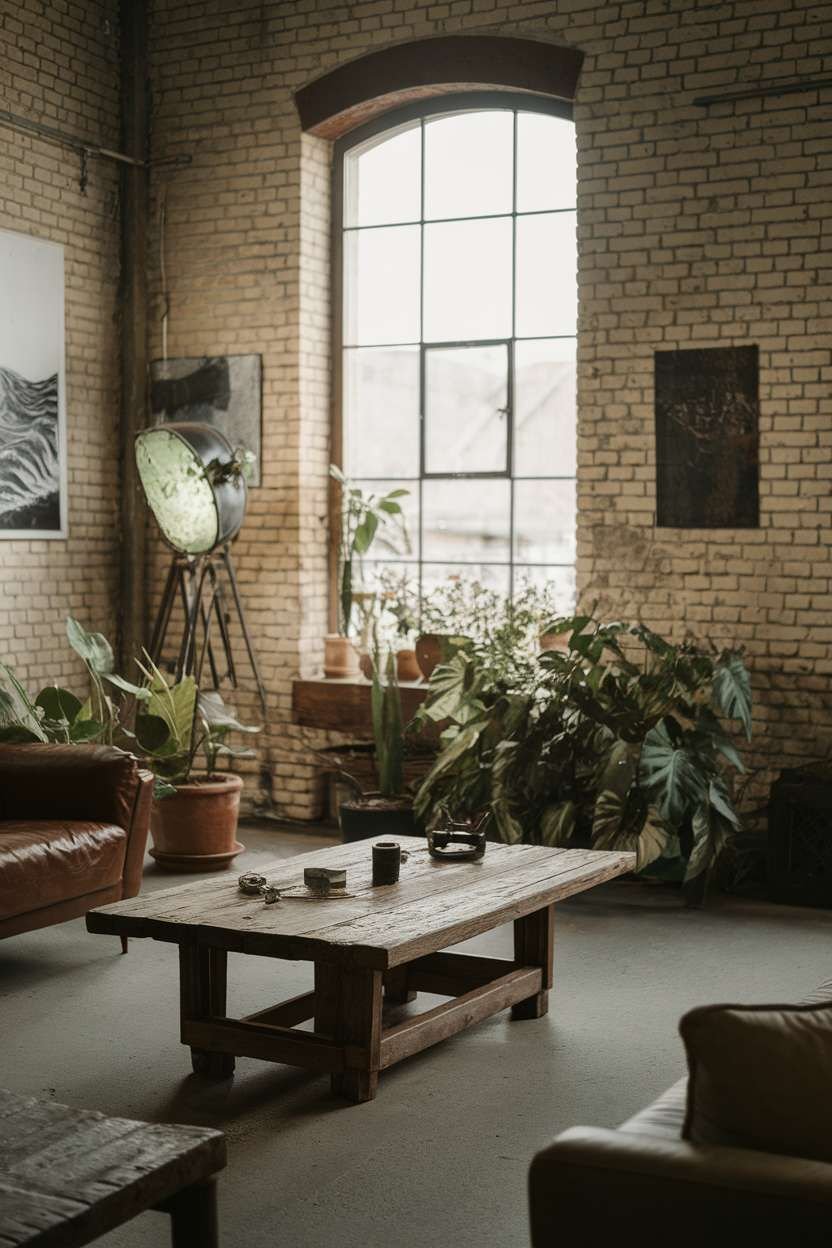
10. Expose one wall’s brick and keep surrounding walls understated.
One accent wall delivers the full industrial statement. Everything else in warm white or soft greige prevents visual overload.
11. Polish or seal concrete floors rather than leaving them raw.
Untreated concrete says unfinished. A sealed or polished surface makes the exact same material feel planned and intentional.
12. Opt for wide-plank salvaged hardwood when warmth is the priority.
Reclaimed timber floors communicate history, character, and organic warmth all at once. They ground an industrial room in a way no other floor covering can replicate.
13. Install black steel-frame windows in an oversize format.
The slim black profile of steel-framed glazing is one of the most recognizable elements of industrial interior design — and one of the most elegant ways to flood the room with natural light.
14. Leave structural ceiling beams visible but stain them warm.
Exposed beams telegraph industrial architecture immediately. Staining them in amber or walnut takes the edge off and draws warmth downward from the ceiling plane.
15. Paint exposed pipes and ductwork in matte black to unify them.
Functional elements become design features with a single coat of flat black paint. The difference between an accident and an intention lives in the finish.
Selecting Furniture That Pairs Edge With Ease
Here’s where people often get tripped up.
They fill the room with iron-framed, rivet-accented furniture and wonder why it feels cold. The answer is simple: everything is hard. Nothing is giving. There’s no softness to rest against.
Every rigid material needs a soft partner nearby.
16. Lead with an oversized leather sofa in a warm, aged tone.
Distressed cognac or deep brown leather is the warmest anchor you can give an industrial room. It gets better with time and makes every other piece look more intentional around it.
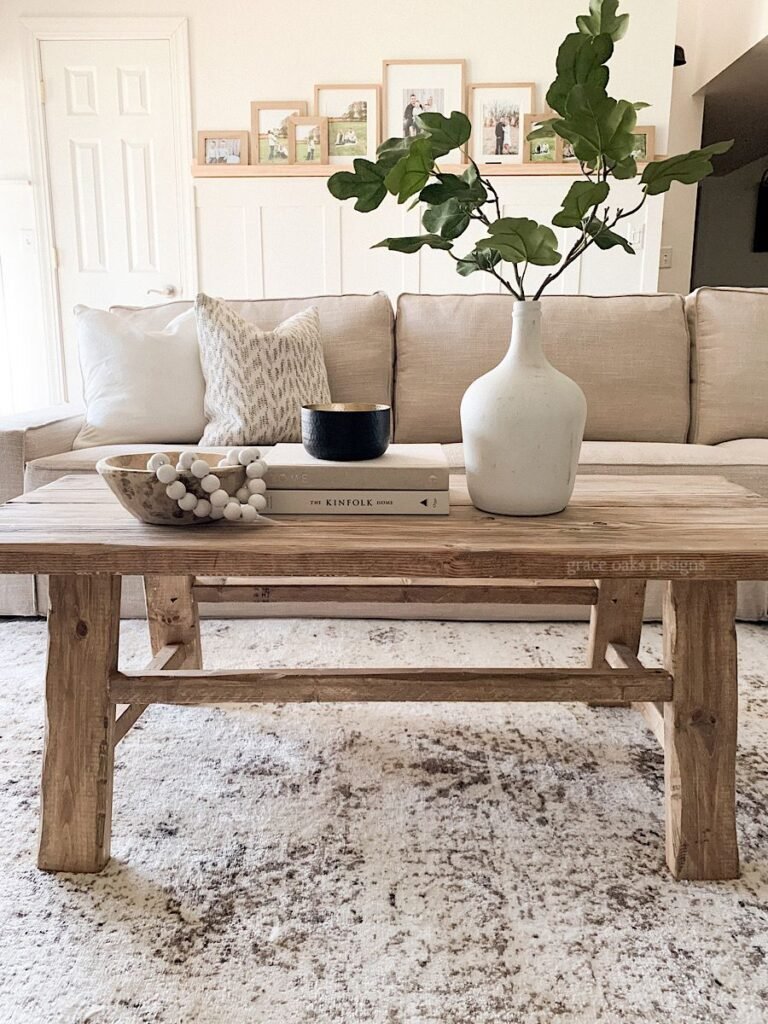
17. Choose a live-edge or slab wood coffee table with a natural profile.
Organic edges push back against the geometric rigidity of the room. The more natural and unforced the shape, the better it works alongside industrial materials.
18. Bring in upholstered chairs in a plush fabric.
Velvet or heavyweight linen facing the sofa creates a layered, welcoming seating area. The softness is the point — it earns its place precisely because it contrasts with everything else.
19. Curate an open iron-and-wood shelving unit with room to breathe.
Underfill deliberately. A few books. One plant. A ceramic piece. Negative space on open shelving reads as confident curation rather than bare neglect.
20. Repurpose a leather steamer trunk as an accent table.
Character, hidden storage, and patina all in one. It’s the piece that makes the room feel like it was assembled slowly, with intention.
21. Add a large woven floor pouf near the sitting area.
A chunky knit or rattan pouf dismantles the hard-surface monotony in the most approachable way. It also signals flexibility — this room is for living in, not just looking at.
Choosing Colors That Warm Without Dimming the Energy
The gray-and-black misunderstanding runs deep in industrial design.
Yes, those tones belong. But an entire room built from cool gray and flat black reads as gloomy rather than industrial. Warmth needs to be built into the color choices.
22. Select warm white for walls over any shade of cool gray.
Creamy whites handle natural light with softness. Cool grays read cold in lower-light rooms — which many industrial spaces are.
23. Pull rust, ochre, and terracotta through the accessories.
An ochre vase. A burnt orange throw. A terracotta planter. These shades share DNA with brick, iron, and raw timber and feel entirely natural alongside them.
24. Use deep green as an ongoing counterpoint to the harder tones.
Plants contribute green naturally, but supplement with an olive pillow or sage textile. Green provides visual relief in a palette that can tilt drab quickly.
25. Apply matte black in deliberate doses, not as a default.
Frame edges. A lamp base. A tray. A few fixtures. Matte black is a punctuation mark — powerful in small doses, overwhelming when it becomes the whole text. Exercise restraint.
Quick Refinements That Signal a Practiced Eye
These small decisions collectively determine whether a room looks casually assembled or quietly mastered.
None of them are expensive. All of them matter.
26. Swap standard outlet and switch covers for matte black or brushed brass.
A fifteen-minute job. Almost no cost. One of the few upgrades where the result vastly exceeds the effort.
27. Reverse book spines on open shelves.
Pages facing out creates a calm, tonal surface rather than a visual jumble of colored covers.
28. Arrange a small vignette on a board at the center of the coffee table.
A round wood or stone board with a candle, a trailing plant, and one well-chosen book. It gives the surface focus and intentionality.
29. Standardize all hardware to one matte family.
Polished chrome undermines industrial design at every level. Matte black, brushed brass, or hammered iron — commit to one and maintain consistency throughout.
30. Stack a vintage rug over a large jute base rug.
Jute anchors and grounds. A worn vintage piece on top adds pattern, color history, and layered depth. Together they do something neither could achieve alone.
31. Preserve at least one obviously imperfect element.
Industrial authenticity lives in imperfection. A chipped edge, a worn surface, a visible repair. These aren’t flaws — they’re evidence of a life being lived.
Textiles That Tell Visitors the Room Is Welcoming
Strip out every textile and what you have left is a stage set, not a room.
Fabric is the material signal that someone actually inhabits this space.
32. Ground the sitting area with an oversize natural fiber rug.
Size up from your instinct. A properly scaled rug — extending under the front legs of all major seating — ties the space together and insulates it from below.
33. Fold a heavy knit blanket over the back or arm of the sofa.
It’s a single gesture that transforms the entire room’s feeling. This room is comfortable. This room is for resting in.
34. Stack linen, cotton, and wool cushions in mismatched earth tones.
Rust, cream, moss, slate. Different sizes and weaves, unmatched by design. The feeling should be accumulation, not curation.
35. Install floor-length linen drapes in an undyed or oatmeal tone.
Even with dramatic steel-frame windows, curtains bring a layer of softness that the architecture alone can’t provide. Natural linen allowed to puddle slightly at the floor reads as effortless and refined.
Wall Treatments That Make the Space Feel Complete
Exposed brick and raw concrete are natural wall treatments in industrial spaces.
Plain drywall with nothing on it is just… a wall.
36. Commission or select one bold, oversized piece for a spare, minimal frame.
Scale matters enormously. One large work above the main seating area has more impact than four small ones. A thin metal or raw timber frame keeps the statement clean.
37. Assemble a gallery wall from frames with mismatched materials.
Iron, blonde wood, aged brass. Varying proportions, varying orientations. The mix is the point — it creates a wall that looks built over time.
38. Hang a large-format metal-framed mirror or install a mechanical wall clock.
A round mirror opens the room up visually and bounces light. A clock with visible gears operates as both functional object and wall sculpture.
39. Lean artwork against the wall on a shelf or ledge rather than hanging it.
Propped art is the room saying “I evolved this way” rather than “I was installed this way.” It’s a small choice with an outsized effect on the room’s overall spirit.
Stop Planning. Start Building.
You’ve already made some moves. The pendant light. The metal accent piece. The direction is right — the full picture just hasn’t arrived yet.
That’s because an industrial room doesn’t get its warmth from any one decision. It builds through the accumulation of contrast — material against material, texture against texture, moment against moment.
Every idea on this list is part of that system. You don’t need all of them. Find the ones that match your space, your life, your budget.
Start with one. Give it time. Add another.
At some point you’ll cross a threshold and the room will stop feeling like a project and start feeling like a home.
Choose one thing from this list. Make it happen this week.
Your living room has been ready. The next move is yours.
🔍 Focus Keyphrase: industrial living room ideas
📌 SEO Title: 39 Industrial Living Room Ideas That Feel Like Home
🔗 Slug: industrial-living-room-ideas
📝 Meta Description: Discover 39 industrial living room ideas that balance raw style with real warmth. From lighting layers to textiles — make the look truly livable.