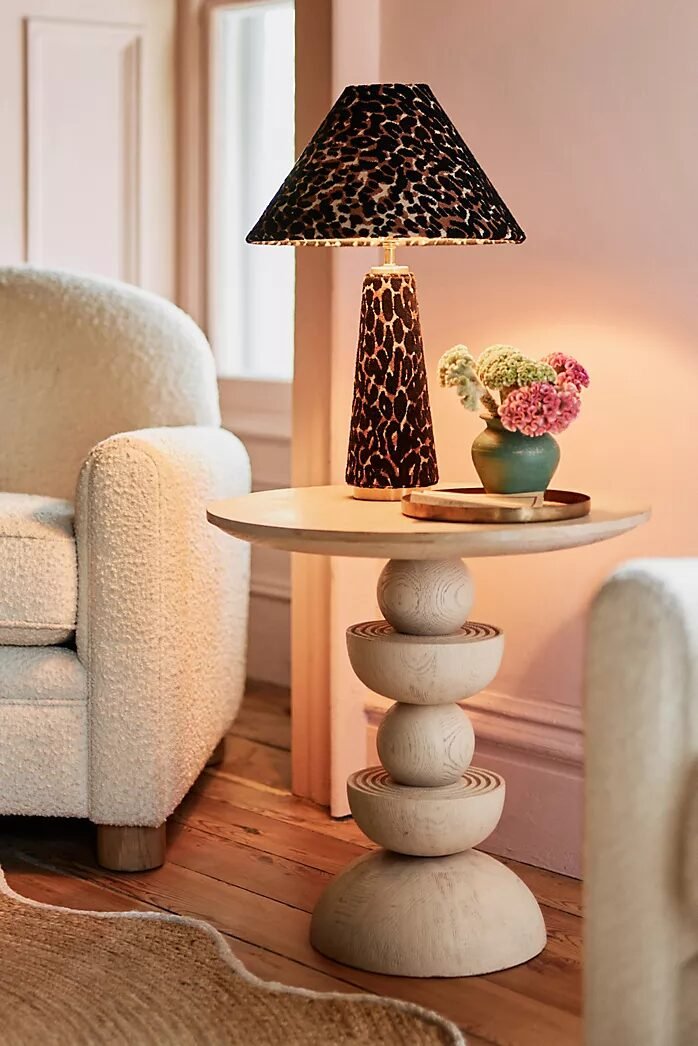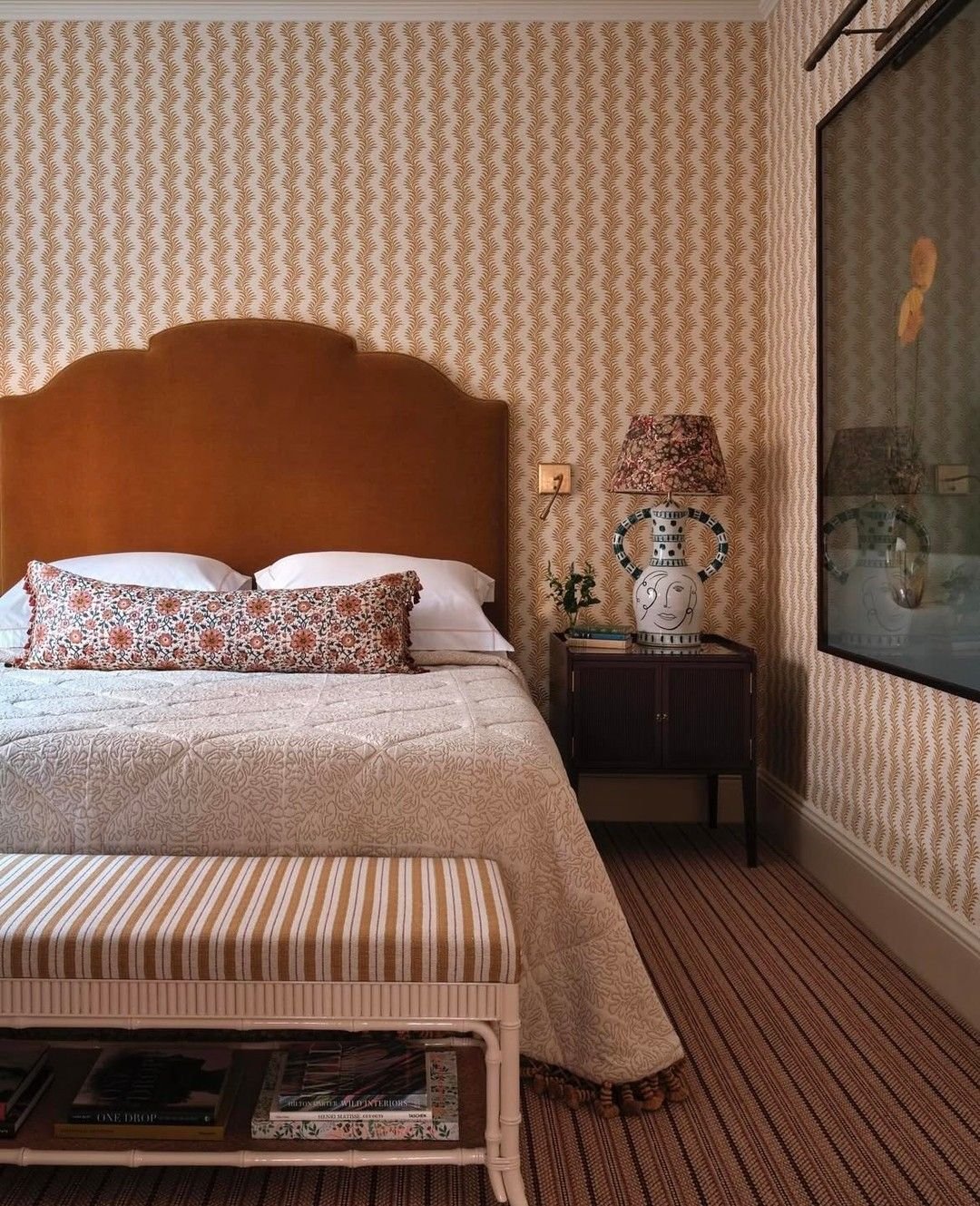
The Art of Bedroom Ambiance: 12+ Lighting Techniques That Transform Any Space
Disclosure : This post may contain affiliate links or paid partnerships. I may earn compensation if you click a link or make a purchase, at no additional cost to you. See my disclosure for more info.
There is a particular quality that certain bedrooms possess.
You walk in and something shifts. The tension in your shoulders drops. Your breathing slows. The weight of the day begins to lift.
It isn’t always obvious what’s creating that effect. The furniture might be simple. The decor understated.
But the lighting — that’s doing most of the heavy lifting.
Most bedrooms suffer from a single flaw: they rely on one overhead fixture to handle everything. The result is a flat, uninviting space that never quite feels right, regardless of how carefully everything else has been chosen.
This article walks you through more than 12 ambient lighting approaches that can change the way your bedroom looks, feels, and functions.
These are practical, accessible techniques you can begin applying this evening.
The Science and Soul of Why Lighting Shapes How You Feel
Walk into a well-designed restaurant and you’ll experience something interesting before the meal even arrives. A calm settles over you. Your posture softens. You’re already more relaxed than you were outside.
The food hasn’t arrived. The music hasn’t registered. The lighting has already done its work.
Your bedroom deserves that same intentional approach. It is the one space in your home where the nervous system genuinely needs permission to slow down — and lighting is one of its most powerful signals.
Ambient lighting — soft, warm, diffused from multiple sources — communicates ease and safety. Get this right, and the quality of your rest will often reflect it.
1. Multiple Light Sources Beat a Single Overhead Every Time
The most pervasive mistake in bedroom lighting is asking one fixture to carry the entire room. A single ceiling light creates harsh contrasts, flat shadows, and an atmosphere that is more clinical than restful.
The principle to apply instead is layering. Distribute light across various heights and points throughout the room.
A bedside lamp introduces warmth at close range. A wall sconce adds dimension at eye level. A floor lamp softens a corner that would otherwise fall into shadow.
The combination of sources creates depth, texture, and the kind of warmth that no single fixture can produce on its own.
2. Color Temperature: The Detail That Defines the Mood
When selecting bulbs, most people consider brightness and ignore the factor that matters most: color temperature.
Measured in Kelvins, it determines whether a light source reads as warm amber, neutral white, or cool blue. For bedrooms, the answer should always fall in the 2700K–3000K range — the territory of candlelight and golden-hour sun.
Anything above 4000K enters the blue-white spectrum associated with daylight and productivity. Useful in a studio. Counterproductive in a room designed for recovery.
It takes five seconds to check the Kelvin number on packaging. This single habit reshapes the entire character of a room.
3. A Dimmer Switch Offers Control That Transforms a Space
Of all the interventions available, this one delivers the most consistent return.
A dimmer allows you to modulate light intensity across the full range of a day’s needs — bright and clear for morning routines, low and warm for evening wind-down.
The fixture doesn’t change. The bulb doesn’t change. The atmosphere does, entirely.
Hardwired dimmers require modest installation. Plug-in adapters require none at all. A room that adapts to you, rather than imposing one static mood.
4. Indirect Headboard Lighting Creates an Effortless Glow
This technique is a staple of thoughtful hospitality design for good reason.
A strip of warm-toned LED lights adhered along the back edge of a headboard produces an indirect glow that radiates onto the wall behind it. The light source itself remains hidden; only its gentle effect is visible.
The result is a soft halo that elevates the entire headboard wall — adding depth and warmth that feels deliberate without drawing attention to the mechanism behind it.
Installation typically takes under fifteen minutes. Most kits are self-adhesive and plug-powered.
5. A Himalayan Salt Lamp Earns Its Place in Any Bedroom
Their continued popularity is well-founded.
The glow of a Himalayan salt lamp sits at a naturally ultra-low color temperature — warm, orange-amber, deeply relaxing. It is, by its nature, incapable of creating harshness.
Positioned on a nightstand, it functions as a secondary accent — not a primary source, but a warm complement that completes the layered effect.
It also happens to be a piece that invites conversation.
6. Lampshade Material Has a Greater Effect Than Most Realize
A lamp is only as effective as the shade it carries.
White or translucent shades allow light to project with minimal diffusion — creating a brightness that reads as harsh even when the bulb is warm.
Replacing these with shades in linen, burlap, or textured natural fabric changes the quality of the light entirely. The material absorbs and softens, dispersing light in all directions rather than directing it.
The room becomes more evenly bathed. The atmosphere becomes noticeably more refined.
7. Recessed Lighting Done Thoughtfully Adds Genuine Depth
The criticism of recessed lighting is usually warranted: too many fixtures, too bright, too uniform, too downward-facing. But that is a problem of execution, not concept.
A restrained application — two or three cans on a dimmer, positioned to wash across a textured wall — introduces warmth and depth that no table lamp can replicate.
If renovation is part of your plans, build this in. If not, retrofit recessed LED kits offer a less invasive path to the same effect.
8. Puck Lights Inside Shelving Units Are a Quiet Revelation
Open shelves and built-in niches are often underestimated as lighting opportunities.
Small battery-operated puck lights placed inside a shelf — angled to bounce light off the rear panel — transforms functional storage into a glowing architectural feature.
The pieces displayed on the shelf become illuminated in a way that reads as gallery-like rather than incidental.
No wiring. No contractor. Press and done.
9. String Lights Deserve More Credit — When Handled With Care
The gap between String lights that look enchanting and those that look improvised is almost entirely a matter of placement.
Avoid draping them without structure. Run them deliberately along a ceiling line, recessed behind a ledge or molding. Or weave them through sheer curtains for a luminous, diffused softness.
Use warm white exclusively. Choose the thinnest wire available. Treated with this level of care, string lights add genuine warmth without sacrificing elegance.
10. A Wall Sconce With an Adjustable Arm Is Quietly Brilliant
This is one of the more elegant solutions in bedroom lighting design.
A wall-mounted sconce with an adjustable arm transitions effortlessly between focused task light and ambient room glow — a single fixture fulfilling two roles with sophistication.
Mounted on either side of the bed, it frees the nightstand entirely, opening the surface and streamlining the room’s composition.
Plug-in versions require no electrical work. A brass or antique gold finish ages particularly well in this context.
11. A Well-Placed Floor Lamp Redefines a Room’s Geometry
Every bedroom has a corner that resists easy use — too narrow for furniture, too prominent to ignore.
A floor lamp with a fabric shade resolves this immediately. It occupies the space with purpose, contributes warmth, and makes the room feel complete rather than unresolved.
Pairing an arched floor lamp with a reading chair beneath it creates something more than a lighting arrangement — it creates a composed scene within the larger room.
12. Candles as a Considered Lighting Element
Candles remain one of the most effective ambient light sources available — when they are treated as design elements rather than afterthoughts.
Group them in odd numbers on a tray or shallow plate, varying their heights. Position the grouping where it can be seen and appreciated.
If open flames are a concern, flameless LED candles now replicate the flicker and warmth with impressive accuracy.
A single candle is an accent. A composed cluster is a statement.
13. Mirrors as Instruments of Light Distribution
This is among the most underappreciated techniques in residential lighting design.
A mirror positioned opposite a light source amplifies and redistributes that light. A room that felt dim suddenly feels open. A corner that felt heavy begins to breathe.
A large leaning mirror against a wall, a round mirror above a dresser, a mirrored tray on a surface: each contributes to the room’s luminous quality in ways that go beyond their decorative function.
14. Window Treatments That Shape the Quality of Natural Light
Ambient lighting is not always about what you add. Sometimes it is about what you allow in, and how.
Heavy blackout curtains serve an essential function at night. But during the day, sheer curtains filter incoming light into something genuinely remarkable: a natural, diffused glow that no artificial source can fully replicate.
Layer the two together. Use the sheers for daytime softness; draw the blackouts when sleep demands it. The best of both conditions, on a single track.
One Common Misstep That Undermines Good Intentions
Before moving forward, one caution is worth raising.
The most consistent error people make isn’t a bad product choice or a poor installation. It’s implementing everything simultaneously, without a guiding plan.
Five new light sources introduced in a single afternoon rarely produce calm. They produce noise — the room ends up feeling cluttered by light rather than enriched by it.
Introduce one or two changes. Give them a week. Observe how the room shifts before proceeding.
Ambient lighting is a conversation between sources. Patience produces better results than enthusiasm.
The Bedroom You Deserve Starts With Better Light
You spend close to a third of your life in this room. It is worth the consideration.
Not a single technique in this article requires professional installation, significant expense, or design expertise. Each one is genuinely accessible — a matter of intention more than investment.
Select one approach. Apply it this evening. Notice the quality of what changes.
Then, when you’re ready, add the next layer.
The bedroom you’ve been imagining is not far away. More often than not, it’s just a dimmer switch and a warm bulb away from reality.